
Why International Payments Fail : How to Improve Success Rates

For global merchants, international payment failures are often dismissed as “issuer issues” or “random bank behavior.”
They are not.
Most international payment failures are systemic, predictable, and fixable. And if you do not actively design for success, they quietly show up as:
Lower checkout conversion
Higher acquisition costs
More customer support tickets
Worse unit economics as you scale internationally
This guide breaks down:
Why international payments fail far more than domestic ones
What card networks, issuers, and processors actually penalize
How high-performing global merchants improve success rates
How xPay structurally improves international payment acceptance for Indian businesses
1) Why international payments fail more than domestic
A domestic payment is simple. An international payment is not.
In a cross-border transaction, you are dealing with:
A card network
The customer’s issuing bank
A processor or gateway
Acquiring banks
Currency conversion
Local and international regulations
Fraud and risk engines across multiple layers
Each additional layer introduces new failure points.
This is why international payments consistently see lower approval rates compared to domestic transactions, even for legitimate customers.
2) The most common reasons international payments fail
a) Issuer risk and fraud controls
Issuing banks are significantly more conservative with cross-border transactions.
Common triggers include:
Card country vs IP or device mismatch
First-time merchant purchases
Unusual ticket sizes for that card
Velocity from a new geography
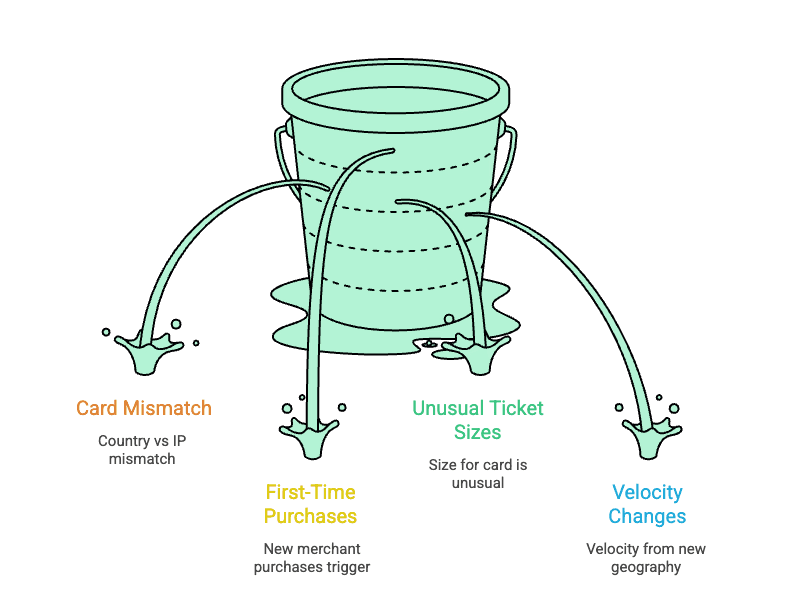
Many declines labeled as “fraud” are actually issuer uncertainty, not real fraud.
b) Missing or incorrect compliance data
For Indian merchants in particular, international payments require additional metadata:
Correct purpose codes
IEC or equivalent documentation
Transaction classification accuracy
If this data is missing or misconfigured, payments may be declined, delayed, or blocked at settlement.
Stripe’s own documentation for Indian merchants highlights how critical these details are for reducing declines and compliance issues Stripe.
c) Currency and settlement friction
Not all issuers are comfortable with all currencies.
Some block certain presentment currencies
Some apply stricter rules to non-local currency charges
Poor FX handling increases decline probability
Showing the wrong currency at checkout is a silent conversion killer.
d) Authentication and 3DS issues
Strong Customer Authentication is required in many regions.
Failures often happen because:
3DS is incorrectly implemented
Fallback flows are missing
Authentication UX is poor
This causes customers to drop off or issuers to decline the transaction.
e) Descriptor confusion
If a customer does not recognize the merchant name on their statement:
Issuers lower trust scores
Customers abandon authentication
Disputes rise later
Descriptors are a success rate lever, not just a support detail.
3) What card networks and issuers really care about
Understanding this changes how you design payments.
Issuers prioritize:
Transaction familiarity
Location consistency
Historical success patterns
Clear authentication signals
Networks enforce:
Authentication where required
Accurate transaction metadata
Clean authorization flows
Processors penalize:
High decline ratios
Poor dispute performance
Compliance gaps
This is why payment success rate is not just a checkout problem. It is a full-stack systems problem.
4) How to improve international payment success rates
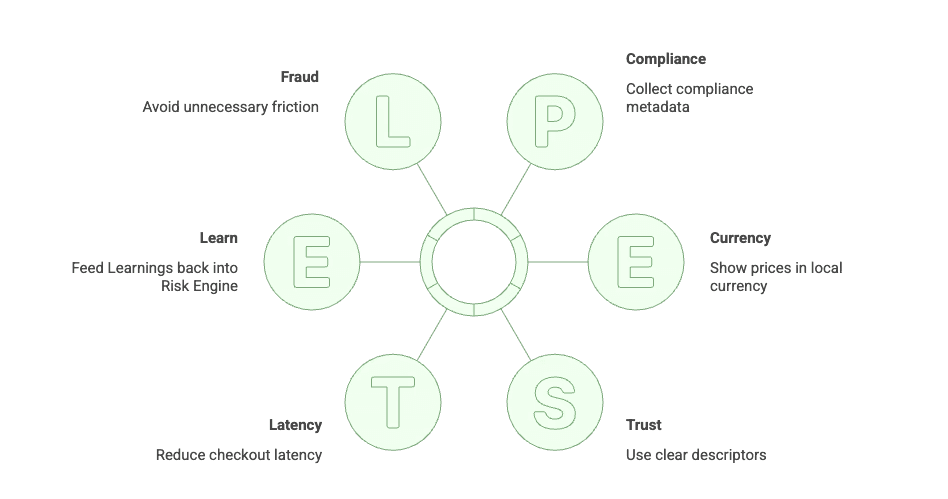
High-performing global merchants focus on three layers.
Layer 1: Prevention before checkout
Collect complete compliance metadata
Use geo-aware risk checks instead of blunt rules
Support local payment methods where cards underperform
Avoid unnecessary fraud friction for low-risk users
Prevention drives the biggest lift in success rates.
Layer 2: Optimize the checkout experience
Show prices in local currency
Use clear, recognizable descriptors
Implement 3DS correctly with fallback flows
Reduce checkout latency
Confidence reduces both declines and drop-offs.
Layer 3: Learn from failures
Track decline reasons by country and issuer
Separate soft declines from hard declines
Retry intelligently instead of blindly
Feed learnings back into risk and routing rules
Every failed payment is data.
5) How xPay improves international payment success rates
Most payment setups try to optimize success rates at the edges. xPay fixes the core structure.
Local acquiring instead of remote cross-border charging
xPay operates as a local Collection Agent for merchants.
For collection:
Payments are processed via licensed local processors and banks in the customer’s geography
Funds are settled into a local collection account
Money is then transferred to the merchant’s INR account via regulated AD1 banking channels or PA-CB providers
To issuing banks, these transactions look local or near-local, not risky foreign charges.
This materially improves authorization success.
Why local acquiring increases approval rates
Local acquiring works because:
Issuers trust local transactions more
Cross-border risk flags are reduced
Authorization latency is lower
Currency expectations align with issuer policies
Merchants see:
Higher approval rates
Fewer issuer-driven declines
Better performance in high-friction markets
Fully compliant settlement into India
Success rates do not matter if settlements break later.
xPay ensures:
Funds enter India through regulated AD1 banking routes
FEMA and RBI compliance by design
GST-compliant FIRCs issued instantly by partner banks or providers
Clean audit trails for every transaction
This removes downstream blocks, reversals, and bank interventions that quietly hurt reliability.
The net effect
xPay delivers:
Higher international payment success rates
Fewer false declines
Predictable INR settlements
Lower operational and compliance risk
Payments are designed to succeed by default, not patched after failures.
6) A 30-day checklist for global merchants
Compliance
Verify purpose code and IEC setup
Audit transaction metadata
Checkout
Enable local currency display
Improve descriptors
Review 3DS implementation
Risk
Replace blunt rules with geo-aware logic
Monitor issuer decline patterns
Operations
Track success rates weekly
Review top failing countries and methods monthly
7) FAQs
Why do international payments fail even for real customers?
Issuer uncertainty and risk controls, not just fraud.
Is improving success rates only about fraud reduction?
No. Compliance, routing, currency, and authentication matter equally.
Should merchants track success rate as a core metric?
Yes. It directly impacts revenue, CAC efficiency, and growth velocity.