
Best Stripe Alternative for Indian Businesses (2026)


Stripe is a global favorite, but India is unfortunately not a focus for them. Limited local support, high transaction fees and compliance headaches often leave entrepreneurs searching for better options. Add to that the challenge of randomly blocked payouts and restricted features, and it’s no wonder people are still looking for the best International Payment Gateway for Indian businesses.
Let’s unpack the key reasons why Stripe isn’t always the perfect fit for India’s dynamic business needs.
Top Alternatives to Stripe for Indian Businesses
Now that Stripe is not an option due to its invite-only stance in India, below alternatives step in to help Indian businesses manage cross-border payments efficiently:
xPay
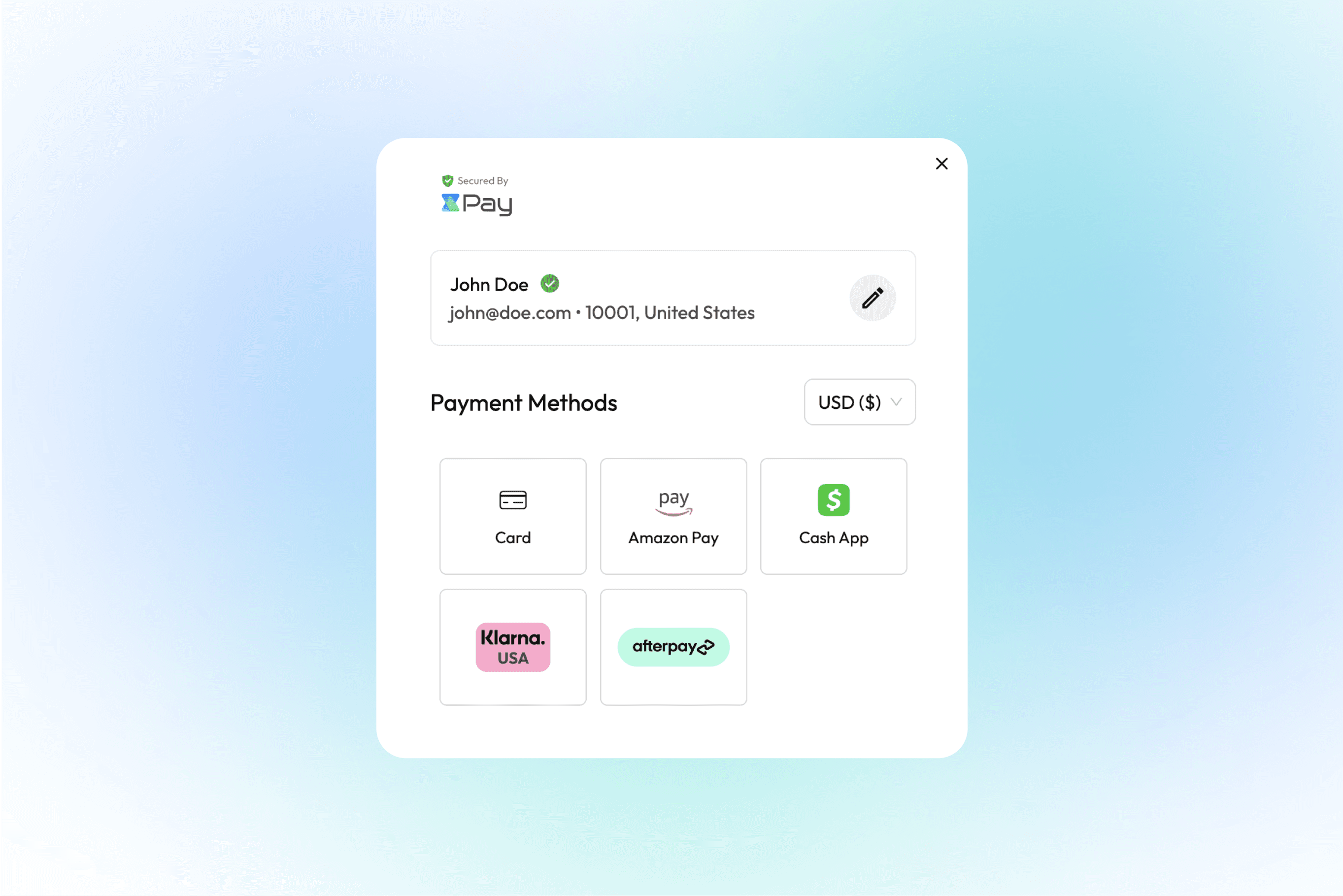
Why Consider It: YC-backed Enterprise-grade solution for Indian businesses, xPay simplifies cross-border payments with features tailored to meet foreign regulations.
Pros:
Best in market fees - 50% more affordable than (including forex) than the other Payment Gateways
Only Payment Gateway to have 40+ global payment methods like Apple Pay, Klarna, Cash App and Credit Card EMI
End-to-end Sales Tax handling
10 min support SLA
Easy integration
Instant FIRCs
Only Indian Payment Processor with 95%+ Success Rate.
PayPal
Why It’s Popular: Trusted globally, PayPal is one of the most popular solutions out there for cross border payments.
Pros: Easy setup, multi-currency support, good success rates and widespread client familiarity.
Cons:
High fees — 9% & poor exchange rates.
Account freezes are also a common complaint.
PayPal does not have a support team in India.
No invoicing solution
Does not handle Sales Tax
Does not provide alternate payment methods.
Razorpay
What It Offers: A homegrown payment gateway, Razorpay supports both domestic and international transactions.
Pros: Integration-friendly APIs and decent support because it is an Indian Payment Gateway.
Cons:
Upto 50% failure rates, especially high in developing markets
Platform fees + Forex fees come up to 8%
18% GST applicable on their fees additionally.
Does not handle Sales Tax
Does not provide alternate payment methods.
Cashfree Payments
What Stands Out: Same as Razorpay, it supports both domestic & international payments.
Pros: Cashfree Payments offers easy integration for both Indian and international businesses. Also decent Customer support.
Cons:
Fees are similar to Razorpay, 8%+
Can’t use it for subscription payments
Does not support alternate payment methods
Does not handle Sales Tax
High failure rates (up to 50%)
Payoneer
Who Uses It: Freelancers and SMEs needing global payment accounts.
Pros: Low-cost withdrawals, multi-currency accounts, and no additional VAT.
Cons:
Delayed payouts and hefty payout fees
Does not provide instant FIRCs.
Can’t use it for subscription payments
Does not handle Sales Tax
Does not provide alternate payment methods.
Why Stripe isn’t ideal for an Indian Business?
Stripe's New Rules: The Invite-Only Dilemma
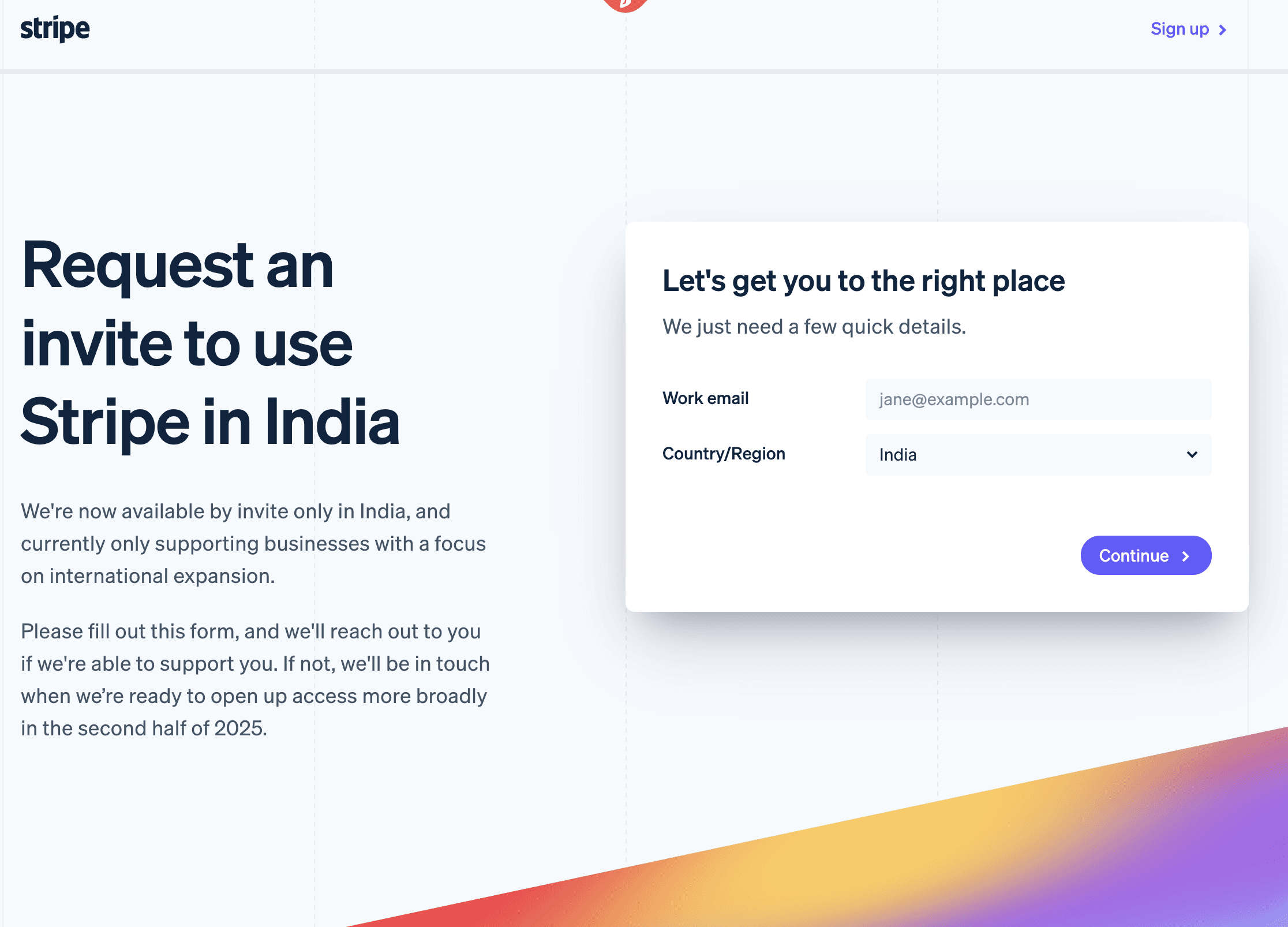
As of mid-2024, Stripe India no longer accepts new businesses without an invitation, creating a major hurdle for Indian companies. The alternative — setting up an overseas entity — comes with complex regulations, legal paperwork, high costs, and operational challenges in a foreign jurisdiction (Read more about it on here). For many Indian Public Companies & Late Stage startups, the process feels insurmountable due to regulatory pressures.
Sales Tax: A Complex Puzzle
Think of GST in India; in the U.S., it’s sales tax. While Stripe calculates what you owe, it stops there — it doesn’t collect, file, or pay it for you. You’re on your own to navigate multiple tax deadlines and staying compliant, failure to do so can cost you up to 25% of the tax amount as penalty + up to a whopping 40% interest.
High Fees: A Margin Killer
Stripe India's platform fees typically range between 4–6%, but once you factor in forex charges, the total cost can climb to nearly 7% per transaction. For enterprises this eats up the top line.
Customer Support Woes
Since Stripe is no longer based in India, its customer support has faced criticism for slow response times and difficulty in addressing issues promptly. This can be especially frustrating when dealing with cross-border payment complexities that require quick resolutions.
Our Recommendation
Stripe’s limitations might feel like a roadblock, but they’re really an opportunity to explore better-suited options for Indian businesses. While alternatives like PayPal, Razorpay, and Payoneer have their merits, they often experience high failure rates and don’t handle your sales tax obligations.
Due to these reasons, new-age solutions like xPay — which take care of your sales taxes and give you 95% success rates, all-while being 50% cheaper than other solutions — are worth a look.
Frequently Asked Questions
What is the best Stripe alternative for Indian businesses?
For Indian companies selling globally, several Stripe alternatives exist, including xPay, PayPal and Razorpay in India
However, many global-first businesses are increasingly choosing xPay because it is built specifically for Indian companies accepting international payments. It offers higher approval rates, global payment methods like Apple Pay and Klarna, instant FIRCs, and integrated sales tax handling.
Why is Stripe invite-only in India?
Stripe moved to an invite-only onboarding model for new Indian businesses in 2024 due to regulatory and operational constraints.
As a result, many startups can no longer directly sign up for Stripe India. The common workaround is setting up a foreign entity, which introduces additional legal, tax, and compliance complexity.
Which payment gateway has the highest success rate for international payments?
International payment success rates vary depending on local acquiring infrastructure and payment method coverage.
Gateways designed specifically for cross-border payments typically perform better. For example, xPay reports 90–95% success rates on international transactions, while many traditional gateways average 60–80% depending on geography.
Higher success rates directly increase captured revenue without increasing marketing spend.
What are the typical fees for international payment gateways in India?
International payment gateway fees usually include:
• Platform processing fees
• Foreign exchange (FX) conversion costs
• Bank settlement fees
For many gateways such as Razorpay or Cashfree Payments, the effective cost can reach 7–8% per transaction once FX is included.
Platforms built specifically for cross-border payments often provide lower effective pricing through optimized FX routing.
Do international payment gateways handle sales tax automatically?
Most payment gateways do not handle sales tax compliance.
For example, while Stripe can calculate sales tax, businesses still need separate tools to collect, file, and remit taxes across jurisdictions.
Some newer platforms such as xPay offer end-to-end sales tax handling, including calculation, collection, and compliance support.
Which payment gateways support global payment methods like Apple Pay and Klarna?
Many global consumers prefer local payment methods instead of cards.
Platforms like xPay support 40+ global payment methods, including Apple Pay, Klarna, Cash App, and regional wallets.
Traditional Indian gateways such as Razorpay and Cashfree Payments primarily support card payments for international transactions.