
Best Cross-Border Payment Tools for Indian Businesses in 2026 (By Use Case)

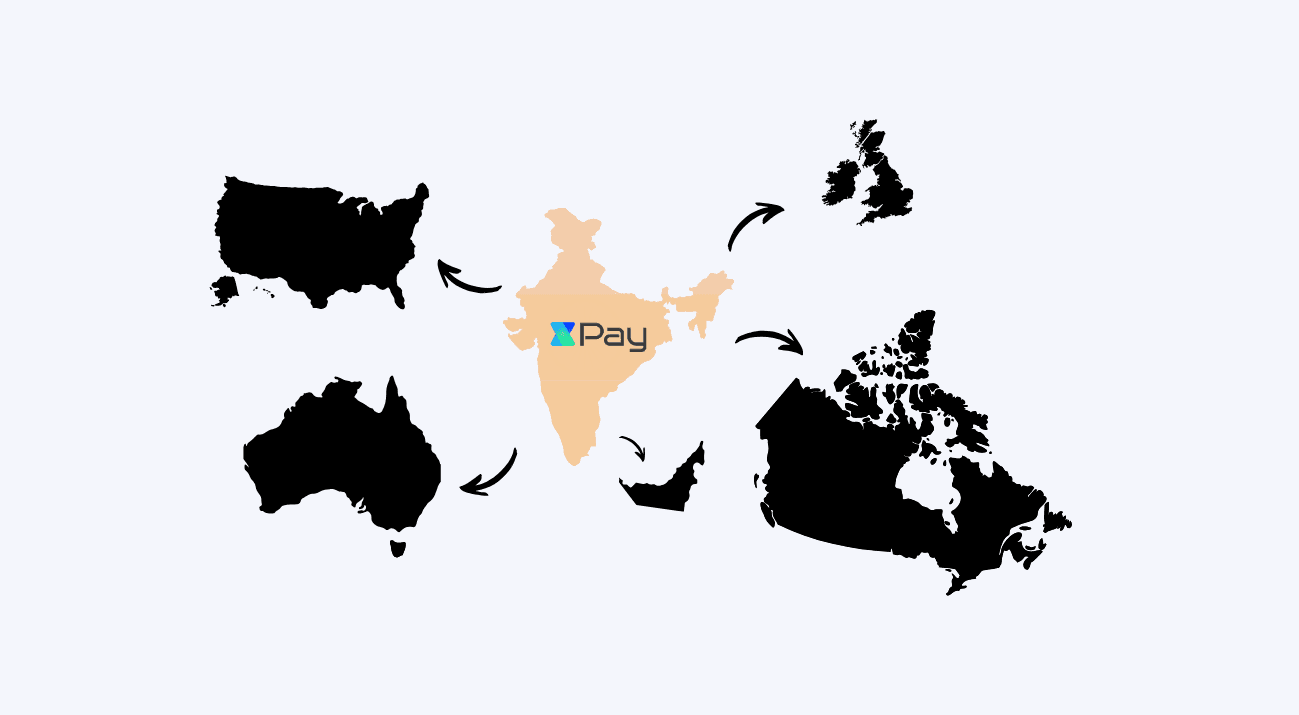
Indian businesses expanding globally face one core challenge:
there is no single payment solution that works for every use case.
The most effective approach in 2026 is to build a layered payment stack, where each component is optimized for a specific flow.
Quick answer:
Use a performance-driven payment layer like xpay for international cards, subscriptions, and checkout conversion
Use bank transfer infrastructure for B2B collections, FX optimization, and large transactions
This guide explains how Indian businesses should handle:
International card payments
Global subscriptions
Local payment methods
Bank transfers
High-ticket B2B collections
Compliance (RBI, FEMA, FIRC)
What are cross-border payment tools?
Cross-border payment tools are systems that enable Indian businesses to accept and receive payments from international customers and clients while ensuring compliance and efficient settlement.
These tools typically handle:
Payment collection (cards, wallets, bank transfers)
Currency conversion (FX)
Settlement into INR accounts
Compliance documentation (FIRC, FIRA)
What problems do Indian businesses face with global payments?
Most payment failures or inefficiencies come from trying to use one provider for everything.
Common issues:
Low success rates on international cards
Lack of local payment methods in key markets
High FX costs and unclear conversion rates
Inefficient handling of subscriptions
High costs for large B2B transactions
Complex compliance requirements
The solution is not a better single provider.
It is choosing the right infrastructure for each use case.
Use Case 1: Accepting international card payments
What is the best way to accept card payments from global customers?
Use a system optimized for high approval rates, local acquiring, and payment method diversity.
Why card payments fail internationally:
Issuer banks decline cross-border transactions
Lack of local routing increases failure rates
Customers abandon checkout due to friction
What works in 2026:
Multi-acquirer routing across geographies
Dynamic 3DS (only when required)
Support for wallets and alternative payment methods
Where xPay fits:
xPay is designed specifically for this layer.
It enables:
High success rates on international transactions
Access to 45+ global payment methods
Optimized checkout flows across regions
Business impact:
Higher conversion rates
Increased revenue per visitor
Reduced payment failures
If your business depends on online checkout, this is the most critical layer.
Use Case 2: Managing global subscriptions
How do Indian businesses manage recurring global payments?
Through a combination of tokenization, retry logic, and off-session billing.
Core challenges:
Failed recurring payments
Customers dropping off due to re-authentication
Lack of retry logic
What works:
Tokenized payment methods
Automated retries on failed payments
Charge-at-will (off-session billing)
Where xPay fits:
xPay enables:
Secure token storage
Smart retry systems
Full subscription lifecycle management
Business impact:
Higher renewal rates
Reduced churn
Improved lifetime value (LTV)
For SaaS, edtech, and subscription businesses, this layer directly impacts revenue predictability.
Use Case 3: Accepting local payment methods globally
Why are local payment methods important in cross-border payments?
Because card usage varies significantly by country.
Market reality:
Many users prefer wallets over cards
BNPL adoption is increasing globally
Local methods outperform cards in specific regions
What businesses need:
Access to multiple payment methods
Region-specific checkout optimization
Where xPay fits:
xPay supports:
Apple Pay, Google Pay
BNPL options like Klarna
Region-specific payment methods
Business impact:
Higher conversion in non-card markets
Better customer experience
Expansion into new geographies
Use Case 4: Receiving international bank transfers
What is the best way to receive payments from international clients?
For invoice-based payments and large transactions, bank transfers are more efficient than cards.
When this matters:
B2B transactions
Export businesses
Agency and consulting payments
What businesses need:
Virtual accounts for global collections
Efficient FX conversion
Fast INR settlements
At xPay, this layer is supported through partners like xflowpay which is designed to handle cross-border bank transfers and collections efficiently.
Business impact:
Lower cost compared to card payments
Better FX transparency
Faster settlement cycles
Use Case 5: Handling high-ticket B2B collections
How should Indian businesses collect large international payments?
Through bank transfers, not card payments.
Why cards are inefficient here:
High MDR (fees)
Lower success rates on large transactions
FX inefficiencies
Better approach:
Invoice-based billing
Direct bank transfers
Optimized FX conversion
For these flows, infrastructure like xflowpay is typically used to:
Reduce costs on large transactions
Enable reliable international collections
Improve settlement timelines
Business impact:
Higher margins
Better cash flow
More efficient enterprise transactions
Use Case 6: Staying compliant (RBI, FEMA, FIRC)
How do Indian businesses stay compliant while receiving international payments?
Requirements:
Routing via authorized banking channels
Correct purpose codes (e.g., P1109)
FIRC or FIRA documentation
Where xPay fits:
xPay simplifies compliance by:
Structuring INR settlements correctly
Automating FIRA generation
Maintaining audit-ready records
Role of bank transfer infrastructure:
For bank transfers, the infrastructure layer ensures:
Proper documentation
Transparent FX tracking
Clean reconciliation
Business impact:
Reduced compliance risk
Easier accounting
Faster audits
How to choose the right cross-border payment setup
What is the best cross-border payment setup for Indian businesses in 2026?
The most effective approach is to use a layered system:
Use xPay for:
International card payments
Subscriptions
Local payment methods
Checkout optimization
Use bank transfer infrastructure for:
B2B collections
High-ticket payments
FX and settlements
Final takeaway
There is no single “best” cross-border payment tool.
The best solution depends on the use case.
For Indian businesses scaling globally:
Cards and subscriptions require a high-performance payment layer
Bank transfers require efficient FX and settlement infrastructure
Combining both ensures:
Higher conversion rates
Lower transaction costs
Better compliance
Scalable global operations
FAQs
What is the best cross-border payment solution in India?
The best solution depends on the use case but for Card payments, subscriptions, and checkout flows the best solution in the market is xPay.
What is the cheapest way to receive international payments?
For large transactions, bank transfers are typically cheaper than card payments due to lower processing fees.
Can Indian businesses accept global subscriptions?
Yes, with tokenization, retries, and off-session billing, recurring global payments can be managed efficiently.
Do I need FIRC or FIRA for international payments?
Yes, these documents are required for compliance, accounting, and regulatory purposes.
Should I use one provider or multiple?
Most global businesses use multiple layers to optimize for conversion, cost, and compliance, use xpay and xflowpay for overall excellence.